Hello

Transforming Ideas into market-leading products with innovation, strategy, and customer-centric execution.

With 16+ years of experience in Product Management, I build scalable solutions that drive growth, enhance user experiences, and create lasting impact.

What I Do

Product Strategy & Roadmapping

Crafting Product roadmaps that align with business goals, ensuring scalable and high-impact solutions. Expertise in market research, competitive analysis, and feature prioritization for optimal growth.

Cross-Functional Leadership

Leading high-performing teams by fostering collaboration between product, engineering, marketing, and sales. Strong stakeholder management and strategic alignment to drive business success.

Digital Transformation & Innovation

Leveraging cutting-edge technology to drive digital transformation, streamline processes, and enhance customer experiences. Specializing in automation, AI-driven insights, and product-led growth strategies.

Customer-Centric & Agile Product Management

Building user-first products with intuitive UX/UI, data-driven insights, and continuous feedback loops while ensuring agile execution. Expertise in analytics, sprint planning, backlog management, and cross-functional collaboration.

Testimonials

Professional Engagements

Education

2023
Indian Institute of Management, Lucknow

Advance Programme In Strategy For Leaders

2013
Institute of Management Technology, Ghaziabad

Post Grad. Dip. Business Administration

2008
Nagpur University

Bachelors of Engineering

Professional Journey

May 2020 – Oct 2024 | Singapore
New Future Holdings

Sr Product Manager

  • Transitioned from a regional APAC product to a global Turnkey iGaming solution.
  • Reduced time-to-market for clients to 4 weeks via a white-label product model.
  • Achieved GBP 100k+ in fixed revenue and significant GGR growth.
Sep 2021 – Jul 2022 | UAE / India
Trukker Technologies

Director of Products

  • Laying foundation of Agile Product management Practices across 
  • Led Pulse 3.0, a global logistics SaaS platform.
  • Managed 15,000 daily trips worth $2M/day in gross trip value.
  • Integrated AI-driven workflows, boosting gross trip value by 21%.
Apr 2019 – Apr 2020 | Singapore
Circles.Life

Product Manager - Platforms

  • Developed a multi-country, scalable platform across ASEAN and Australia.
  • Integrated MarTech tools, enhancing engagement for 900k users with 10M MAUs.
Apr 2016 – Apr 2018 | India
PAYBACK India (Amex Company)

Product Manager ||

  • Re-Designed and developed India’s largest loyalty program using Adobe Experience Suite (AEM)
  • Led omnichannel campaigns and customer engagement strategies by empowering Marketing team with IBM watson and AEM.

Skills

Product Strategy & Roadmapping

95%

Agile Product Management (Epics, User Stories)

85%

Digital Transformation & Process Optimization

80%

Customer-Centric Development

90%

Cross-Functional Team Leadership

75%

MarTech, CRM, and Analytics

80%

Tools & Technologies

JIRA

85%

Notion

70%

Google Analytics

60%

Martech (Clevertap, AEM, etc)

75%

MongoDB Atlas

75%

Draw.io

80%

If you want to understand how AI agents, automation workflows, and API orchestration actually work in production — this guide is for you.

I recently built a Telegram bot that:

  • Detects user intent using a local LLM

  • Extracts city dynamically

  • Routes logic programmatically

  • Calls the OpenWeather API

  • Sends structured climate data back to the user

All using:

No SaaS AI dependency.
No hardcoded decision trees.
No Zapier shortcuts.

This post breaks down the architecture, lessons, and product-level thinking behind it.

Why This Project Matters (Beyond a Weather Bot)

This isn’t about temperature.

This is about:

  • Intent routing

  • LLM output normalization

  • Deterministic branching

  • API orchestration

  • Automation system design

These are the same building blocks used in:

  • AI assistants

  • Internal enterprise tools

  • Multi-step agent systems

  • Conversational SaaS products

If you’re a Product Manager exploring AI systems — this is foundational knowledge.

System Architecture Overview

Telegram Trigger 

Basic LLM Chain (Intent Detection)


Edit Fields (Structured JSON Parsing)

Code Node (Deterministic Routing)

HTTP Request (OpenWeather API)

Telegram Send Message

Step 1: Using LLM as an Intent Routing Engine

Instead of manually checking keywords, I used a structured LLM prompt.
You are a routing engine.
Respond ONLY with valid JSON.
Do not include explanations or text outside JSON.
Schema:
{
"intent": "weather | chat",
"city": ""
}
Rules:
- If the user asks about weather, intent = "weather"
- Extract city if mentioned, else city = ""
- For anything else, intent = "chat"

This ensures:

  • Structured output

  • Controlled schema

  • Reduced hallucination

  • Predictable routing behavior

Example response:

 
{
"intent": "weather",
"city": "Delhi"
}

This converts unstructured chat into structured machine-readable input.

That’s AI orchestration.

Step 2: Parsing LLM JSON Safely in n8n

One critical issue:

LLMs often return JSON as string.

If you don’t normalize it, your IF conditions fail.

In the Edit Fields node, I parsed safely:

 
{{$json.text.intent || JSON.parse($json.text).intent}}
{{$json.text.city || JSON.parse($json.text).city}}

This prevents silent failures and makes the workflow production-safe.

Lesson:
AI output must be normalized before routing.

Step 3: Deterministic Routing Using Code Node

Instead of relying on fragile IF configurations, I used a Code node:

if ($json.intent === 'weather') {
return [{ json: { route: 'weather', city: $json.city } }];
}
return [{ json: { route: 'chat' } }];

Why?

Because product systems need explicit logic.

LLMs decide intent.
Code enforces execution.

That separation is important.

Step 4: Weather API Integration (OpenWeather)

The HTTP Request node calls:

https://api.openweathermap.org/data/2.5/weather

Query parameters:

  • q = {{$json.city}}

  • units = metric

  • appid = YOUR_API_KEY

Important failure case:

If city is empty → API returns:

400 - Nothing to geocode

So routing must prevent weather API calls when city is missing.

This is real-world error handling.

Step 5: Structured Telegram Output

Final formatted response: 

🌤 Weather today : Singapore
🌡 Temp: 23.54°C
🤒 Feels like: 23.02°C
⬇️ Min Temp: 22.5°C
⬆️ Max Temp: 24.62°C
💧 Humidity: 41%
👀 Visibility: 6000m

Clean

Readable.

Dynamic.

This improves user experience significantly compared to raw JSON.

Product Lessons From This Build

1. LLMs Are Not Controllers

They are classifiers and extractors.
Execution logic must remain deterministic.


2. JSON Validation Is Critical

Never trust AI output blindly.
Normalize it before branching.


3. API Guardrails Are Non-Negotiable

Validate inputs before calling external services.


4. Debugging Is System Learning

The errors I hit were not failures.
They were architecture lessons.


Am I On the Right Path?

Yes — and here’s why.

You are moving from:

“Using automation tools”

to

“Designing AI-driven systems.”

You are learning:

  • Prompt engineering for structured output

  • Workflow orchestration

  • External API integration

  • Error containment

  • Modular routing design

This is AI Product Builder territory.

Not beginner automation.

What’s Next If I Were Scaling This?

If Post Production Release, My plan of action are:

  • Add memory (last used city)

  • Add conversation history

  • Implement caching

  • Add retry logic

  • Add centralized error handler

  • Store logs in database

  • Deploy as reusable AI agent template

That’s how bots evolve into platforms.

Final Thoughts

Building AI workflows is not about stacking nodes.

It’s about:

  • Clear intent extraction

  • Structured outputs

  • Deterministic logic

  • Clean API orchestration

  • Thoughtful error handling

This weather bot is a small system.

But the architecture thinking behind it is what matters.

And that’s where real AI product building begins.

🚀 If you found this useful, don’t forget to share it with fellow product enthusiasts!

For a long time, Docker lived in the same mental bucket as DevOps, infrastructure, and things PMs don’t really need to touch.

I heard it constantly in engineering conversations.
I nodded.
I moved on.

Recently, I decided to change that—not to become technical, but to understand what I was missing by staying abstract.

This post is a learning journal for Product Managers who:

  • hear “Docker” often

  • feel it’s out of scope

  • but suspect that avoiding it creates blind spots

Why I Installed Docker (as a PM) (At Least Once)

I didn’t install Docker to learn commands or container internals.

I installed it to:

  • understand setup friction

  • follow technical conversations with context

  • create a base for experimenting with AI tools and workflows

In short: I wanted first-hand exposure, not mastery.

The Blind Spots I Didn’t Expect

Here’s what genuinely confused me during setup—not technically, but product-wise.

1. Docker Desktop wasn’t in the Ubuntu App Store

My first instinct was simple: search the app store.

It wasn’t there.

PM realization:
I subconsciously assume important products are discoverable by default.
They aren’t—especially when the primary user is a builder, not a casual user.

How I addressed it:
I searched Google, read Reddit threads, and used Perplexity to understand why this was the case and what the intended install path actually was.

2. Docker had two versions: CLI and Desktop

At first, this felt unnecessary.

Why two Dockers?

PM realization:
This wasn’t fragmentation—it was intentional abstraction for different users.

How I addressed it:
I chose Docker Desktop first because I’m a GUI-oriented learner.
My goal was to understand what Docker does, not memorize commands on day one.

CLI can come later. Lowering the learning curve mattered more.

3. Installation wasn’t “download and click”

To install Docker Desktop, I had to:

  • download a .deb file (from GitHub)

  • open the terminal

  • run a command to install it

PM realization:
“Easy to install” is relative to the target user.
Docker assumes comfort with terminals—not onboarding tutorials.

How I addressed it:
I didn’t try to understand every command.

I used Perplexity with clear prompts, copied the commands, and focused on getting things to work, not going deep.

That was a conscious PM decision.

4. Permissions blocked me after installation

Even after installing Docker Desktop, I hit permission issues.

Nothing was broken.
Nothing was “wrong.”

It just… didn’t work yet.

PM realization:
Time-to-value isn’t just about features.
It’s about trust during friction-heavy moments.

How I addressed it:
Reddit threads + Perplexity again.
I followed instructions without over-optimizing for understanding.

As a PM, I wasn’t trying to master permissions—I was trying to unblock myself.

What Changed for Me (Before vs After)

Before:

  • Docker felt like infra-only territory

  • Setup friction was invisible to me

  • “It works on my machine” sounded like a joke

After:

  • I understand where friction actually lives

  • I can follow Docker-related discussions meaningfully

  • I see why abstraction and tooling matter so much to adoption

Most importantly:
Docker no longer feels out of scope.

It feels approachable.

Why This Became the Foundation of My AI Product Lab

This Docker setup is now my base layer for:

  • testing n8n automations

  • running AI models and prompt workflows

  • breaking things safely

  • experimenting without demos or SaaS shortcuts

I’m not doing this to be technical.

I’m doing it because owning the environment reveals product truths you never see from the outside.

Steps I followed to Installed Docker Desktop (GUI)

Final Thought for Fellow PMs

You don’t need to master Docker.
You don’t need to learn DevOps.
You don’t even need to understand every command you run.

But touching the setup once changes how you think forever.

What feels out of scope often isn’t.
It’s just unfamiliar

And familiarity starts with trying.

What’s Next

I’ll be documenting:

  • what works

  • what breaks

  • and what PMs usually miss when tools live “below the product surface”

If you’re a PM curious about AI, automation, or developer tools—this is where my learning starts.

🚀 If you found this useful, don’t forget to share it with fellow product enthusiasts!

As a Product Manager, I hear the word Docker all the time.

“Let’s containerize it.”
“It works on Docker.”
“Just run it locally.”

I nodded. I moved on. I never actually touched it.

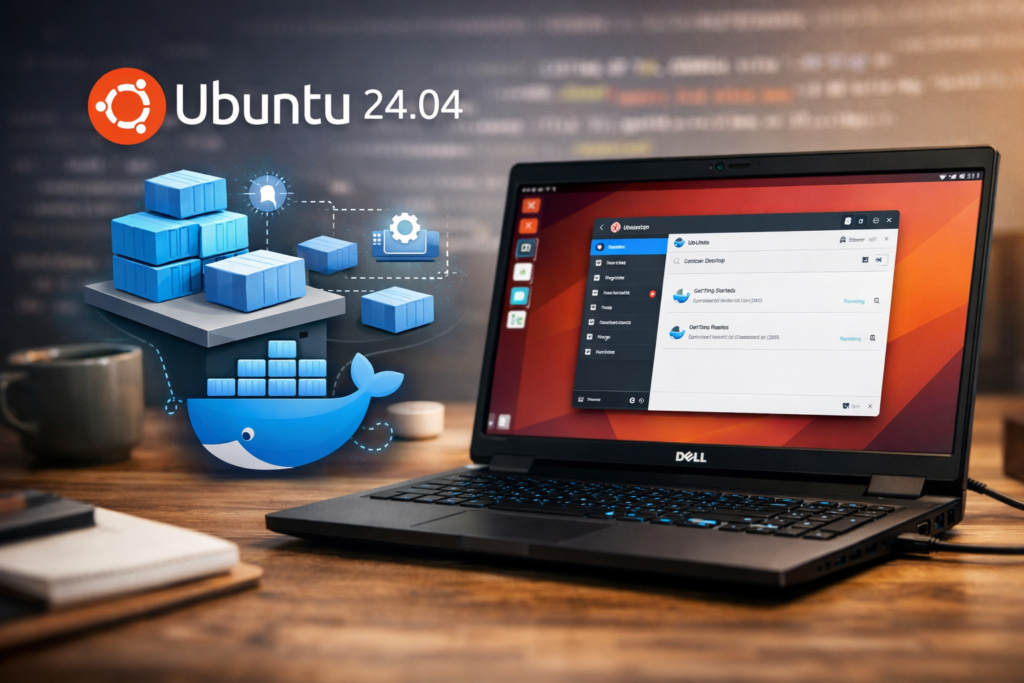
This post documents how I installed Docker Desktop on Ubuntu 24.04, not to become an engineer, but to stop being a Product Manager who doesn’t really understand what Docker is.

This is a learning journal for absolute beginners, especially Product Managers who want context, not command-line mastery.

Why a Product Manager Should Install Docker (At Least Once)

I’m not trying to write production code.

I am trying to:

  • Follow technical conversations without guessing

  • Understand developer constraints

  • Ask better product questions


Installing Docker locally was the smallest, lowest-risk step I could take

Why Startups Should Pay Attention

The uncomfortable truth is this:

AI success isn’t about model quality anymore.
It’s about the infrastructure around the model.

Qwen’s rise highlights four advantages only giants possess:

1. Distribution Advantage

Startups need to market their way to users.
Alibaba just placed Qwen in apps used daily by millions.

2. Capital Advantage

Startups rely on subscription revenue to survive.
Alibaba can offer free access indefinitely.

3. Data Advantage

Su Lian Jye said it well:
“More users mean more feedback — enabling faster fine-tuning.”

This is a flywheel startups can’t replicate without scale.

4. Ecosystem Advantage

AI becomes exponentially more valuable when tied to payments, logistics, local search, business tools, and marketplaces.

Startups build features.
Giants build ecosystems.

My Setup

For clarity and reproducibility:


  • Laptop: Dell G15

  • Operating System: Ubuntu 24.04 (Noble)

  • RAM: 32 GB

  • Graphic Card: NVIDIA GeForce RTX™ 3060 Laptop GPU

  • Goal: Install Docker Desktop and verify it runs locally

Steps I followed to Installed Docker Desktop (GUI)

Step 1: Update and Clean the Base System

Before installing Docker, I updated my system and ensured no legacy Docker components were installed.

sudo apt update && sudo apt upgrade -y
sudo apt remove -y docker docker-engine docker.io containerd runc

APT reported that Docker wasn’t previously installed — which confirmed a clean starting point.


Step 2: Install Required Dependencies

Docker relies on several helper packages for secure downloads and repository management.

sudo apt install -y ca-certificates curl gnupg apt-transport-https software-properties-common

Most were already present, but explicitly installing them avoided surprises later.


Step 3: Add Docker’s Official APT Repository (Ubuntu 24.04)

This was the first moment Docker stopped feeling “magical” and started feeling infrastructure-like.

Create a secure keyring directory

 sudo install -m 0755 -d /etc/apt/keyrings

Download Docker’s GPG key

sudo curl -fsSL https://download.docker.com/linux/ubuntu/gpg -o /etc/apt/keyrings/docker.asc
sudo chmod a+r /etc/apt/keyrings/docker.asc

Add the Docker repository for Ubuntu Noble

echo \
https://download.docker.com/linux/ubuntu \
$(. /etc/os-release && echo "$VERSION_CODENAME") stable" \
  | sudo tee /etc/apt/sources.list.d/docker.list > /dev/null
  "deb [arch=$(dpkg --print-architecture) signed-by=/etc/apt/keyrings/docker.asc] \
 Then refresh package lists:
 
sudo apt update

PM insight: This step alone taught me how seriously Linux treats software trust and verification.


Step 4: Install Docker Engine and CLI

Docker Desktop relies on Docker Engine under the hood. 

sudo apt install -y docker-ce docker-ce-cli containerd.io

In my case, these were already installed or upgraded to the latest versions.


Step 5: Install Docker Desktop on Ubuntu

To make Docker more approachable, I chose Docker Desktop instead of working only from the terminal.

I downloaded the official .deb installer (amd64) and ran: 

cd ~/Downloads
sudo apt install ./docker-desktop-amd64.deb

Docker Desktop:

  • Installed cleanly

  • Enabled required system services

  • Updated user-level systemd configurations automatically

This mattered to me. Visibility beats purity when you’re learning.


Step 6: Start and Verify Docker Desktop

You can launch Docker Desktop either via:

  • Activities → Docker Desktop, or

  • Terminal: 

systemctl --user start docker-desktop

(Optional) Enable startup on login: 

systemctl --user enable docker-desktop

Verify Docker is working: 

docker context ls
docker version

Seeing Docker run locally was the moment abstraction turned into understanding.


What I Learned Installing Docker as a Product Manager

  1. Docker isn’t magic
    It’s packaged infrastructure with clear dependencies.

  2. Hands-on beats theoretical understanding
    Installation alone clarified months of vague conversations.

  3. You don’t need depth to gain empathy
    You just need first-hand exposure.

This Is Just the Beginning

I still wouldn’t call myself “good at Docker.”

But now:

  • I can follow engineering discussions

  • I understand where my gaps are

  • I know what questions actually matter

Next steps for me:

  • Run a simple container

  • Break something safely

  • Learn how applications really ship

If you’re a Product Manager who keeps hearing “Docker” in meetings — try installing it once.

Not to become technical.
Just to stop being clueless.

🚀 If you found this useful, don’t forget to share it with fellow product enthusiasts!

When Alibaba’s Qwen AI app crossed 10 million downloads in just seven days, most of the world saw a viral AI success story.

But product managers felt something else — a shift.

A reminder that the AI landscape is no longer the playground of small, scrappy teams shipping fast.

It’s a domain where ecosystem giants move differently… and win differently.

Because Qwen’s rise wasn’t an accident.
It was a signal.

A signal that the rules have changed.

The Moment the AI Narrative Quietly Flipped 📈

Over the last two years, the AI world was dominated by stories of small teams building breakthrough models, raising big rounds, and competing directly with the industry’s biggest players.

But Qwen shows a less romantic — and more realistic — blueprint.

Alibaba didn’t build a “ChatGPT competitor.”

They built something strategically more powerful:

An AI layer that integrates across everything they already own.

  • E-commerce

  • Maps

  • Local services

  • Enterprise workflows

  • Consumer utilities

Instead of asking users to try a new AI tool,
they gave users AI inside what they already use.

This is what product leaders call embedded distribution.
And it changes everything.

Because when AI lives inside your ecosystem —
AI adoption becomes frictionless.

Demos don’t drive usage.
Distribution does.

Why Startups Should Pay Attention

The uncomfortable truth is this:

AI success isn’t about model quality anymore.
It’s about the infrastructure around the model.

Qwen’s rise highlights four advantages only giants possess:

1. Distribution Advantage

Startups need to market their way to users.
Alibaba just placed Qwen in apps used daily by millions.

2. Capital Advantage

Startups rely on subscription revenue to survive.
Alibaba can offer free access indefinitely.

3. Data Advantage

Su Lian Jye said it well:
“More users mean more feedback — enabling faster fine-tuning.”

This is a flywheel startups can’t replicate without scale.

4. Ecosystem Advantage

AI becomes exponentially more valuable when tied to payments, logistics, local search, business tools, and marketplaces.

Startups build features.
Giants build ecosystems.

Open-Source Levels the Field… Until It Doesn’t

On paper, Qwen is open-source and “available to everyone.”

In practice, open-source only flattens the playing field at the model level
not at the distribution, data, or monetization levels.

This is why even Silicon Valley is now taking notice:

  • Airbnb CEO Brian Chesky says the company “heavily relies on Qwen.”

  • NVIDIA’s Jensen Huang calls it one of the most dominant open-source models globally.

Startups may innovate faster…

…but giants commercialize better.

What This Means for Product and Business Leaders

As PMs, we’re trained to think in terms of:

  • user problems

  • model performance

  • feature prioritization

  • roadmap clarity

But Qwen forces us to think in terms of:

  • ecosystem leverage

  • distribution channels

  • integration depth

  • deployment economics

  • cross-scenario value

Here’s what forward-thinking leaders should take from this:

1. Free-access AI looks attractive… until dependency forms.

Vendor lock-in still exists — it just hides behind “open-source” labels.

2. Where AI lives matters more than what AI does.

Chatbots are features.
Ecosystem AI is strategy.

3. Startups shouldn’t try to match giants at scale.

Instead, they should dominate narrower, high-value verticals where ecosystems have blind spots.

4. The next AI winners won’t be the best models.

They’ll be the ones with the best distribution.

The New Reality: Innovate Fast, But Choose Your Battles

Qwen’s story is not about China vs the US.
It’s not about open-source vs paid models.
It’s not even about Alibaba vs the rest of the AI world.

It’s about a deeper truth:

In AI, innovation is accessible.
Distribution is not.

Startups will continue creating breakthroughs.
But giants — with their ecosystems, capital, and user bases — will commercialize at scale.

And the teams who understand this early will make smarter bets, pick better markets, and build more durable products.

Qwen’s 10M downloads aren’t just a milestone.

They’re a roadmap.

A reminder that to win in AI, you need more than a model.

You need an ecosystem.

🚀 If you found this useful, don’t forget to share it with fellow product enthusiasts!

Some books are not just read — they’re experienced.

“The Polyester Prince” by Hamish McDonald is one such rare work that unravels the extraordinary life of Dhirubhai Ambani — the controversial, revered, and game-changing tycoon who transformed India’s corporate landscape.


🛒 Buy the Hardcover on Amazon: Buy on Amazon

From Chorwad to Corporate India

Born in a modest home in Gujarat, Dhirubhai’s journey began as a teenager in Junagadh during the Indian independence movement. His early brushes with activism and leadership foreshadowed the relentless ambition that would later define his business trajectory.

But it wasn’t just ambition. It was calculated hustle — trading silver in Aden, navigating opaque license raj policies in India, and outmaneuvering competitors with strategic alliances across business and politics.

🧠 What Makes This Book Stand Out?

Unlike the typical hagiographies, The Polyester Prince doesn’t flinch from controversy. It dives deep into:

  • 🏭 How Reliance became a shareholder darling despite fierce institutional resistance

  • ⚖️ The murky relationship between business and politics in India’s liberalization era

  • 🔥 Personal anecdotes that reveal Dhirubhai’s charm, cunning, and contradictions

The book was even banned in India at one point, which only adds to its mystique.

💡 Why You Should Read It

If you’re a:

  • 🌱 Budding entrepreneur looking for inspiration

  • 💼 Corporate strategist exploring Indian market dynamics

  • 📖 Reader interested in modern Indian history

…then this book is a goldmine of insights.

There’s a pattern I’ve seen repeat itself at multiple early-stage startups.

“Everyone’s building”

“Everyone’s hustling”

“Everyone’s busy”

And yet… nothing meaningful ships.

A while Ago, I was Advising a Startup that was facing exactly this:

The energy was there. The talent was there.

But the results weren’t.

Their day-to-day felt like a firefighting drill:

  • No clear goals or priorities.

  • Roles overlapped, often clashing.

  • No agreed-upon North Star — just a moving target.

Every team member was “doing their best,” but without defined GOAL & Accountability, it became a case of everyone building everything and no one finishing anything.

The cracks started to show ❌

❌ Features were rushed out half-baked.

Slack threads turned into warzones of miscommunication.
Priorities reset weekly.
And the delivery team waved red flags at the last minute, constantly.

As a Product leader, I could see what was missing: not motivation, but structure.

The fix wasn’t glamorous — but it worked.

I collaborated with the CTO and rolled out a product workflow that introduced friction by design:

  • A funnel system for requirement intake

  • Weekly prioritization with stakeholders

  • Grooming and estimation before tickets hit engineering

  • A simple rule: if a requirement changed mid-cycle, the sprint restarted — no exceptions

Yes, it was frustrating for some at first. But chaos needed a counterweight. Within 60 days, the shift was visible.

✅ Teams knew what to build and when it would ship
✅ Delivery stopped being a guessing game
✅ Stakeholder anxiety dropped because they finally had predictability

Here’s what most early-stage founders miss

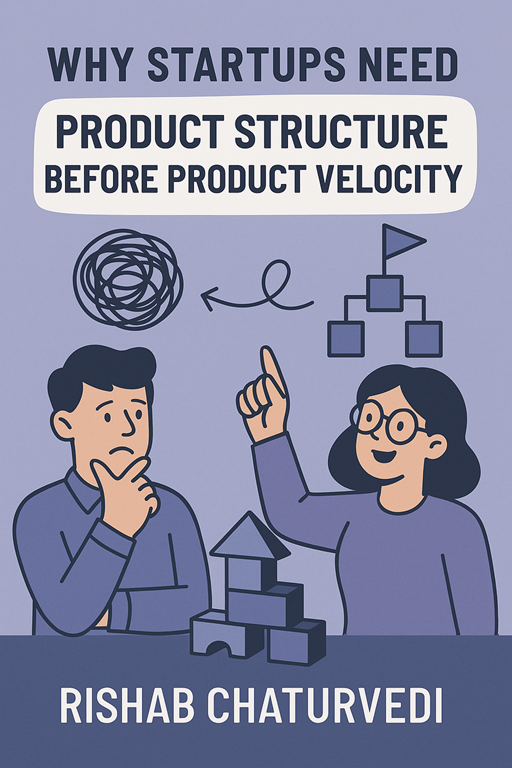
🚫 Product velocity without structure is a trap.
✅ Product structure unlocks sustainable velocity

t’s not enough to hire “builders.” You need people who can operate within defined lanes — and know when to pull others back into theirs.

A well-designed Figma prototype won’t save you from a broken product process.🚫


Clear goals, ownership, and boundaries will.✅

So if you’re a founder scaling your team, ask yourself:

  • Do your teams have clarity on what not to build?

  • Is someone anchoring scope, sequencing, and delivery?

  • Are responsibilities clear, or are roles bleeding into each other?

If not, you don’t need more engineers or a shinier UX.

You need a Product leader who’s hands-on enough to execute, and seasoned enough to bring order to the chaos.

🚀 If you found this useful, don’t forget to share it with fellow product enthusiasts!

Product Management is more than just a job title—it’s a way of thinking. While many view Product Managers (PMs) as professionals who define roadmaps and prioritize features, the reality is far more nuanced. Being a great PM isn’t just about managing tasks—it’s about adopting a problem-solving mindset, making data-driven decisions, and creating meaningful user experiences.

In this post, we’ll explore the key mindset shifts that differentiate effective Product Managers from those merely following a job description. Whether you’re an aspiring PM or a seasoned leader, this guide will help you think like a product manager rather than just act like one.

1. The Evolution of Product Management 📈

Product Management has come a long way—from its early roots in brand management at P & G to becoming a core function in technology companies, startups, and SaaS businesses. Over time, the role has evolved beyond simple project oversight to a strategic, cross-functional discipline that balances business goals, technical feasibility, and user needs.

Then vs. Now:

🔹 Then: Focused on manufacturing & distribution.
🔹 Now: Drives digital innovation, user engagement, and business growth.

2. The Key Mindset Shifts of a Product Manager 🧠

To excel in Product Management, adopting the right mindset is essential. Here are three critical shifts:

From Execution to Strategy

Many assume that PMs are task managers who simply execute what leadership wants. In reality, great PMs drive the strategy—they identify the right problems to solve, analyze market trends, and prioritize features that align with both user needs and business objectives.

From Outputs to Outcomes

A product’s success isn’t measured by the number of features released but by the impact on users and business growth. Instead of focusing on “What did we build?”, great PMs ask, “What problem did we solve?”

From Perfection to Iteration

Perfectionism can be a PM’s biggest enemy. Instead of waiting to launch the “perfect” product, PMs embrace an iterative approach—they launch, learn, and refine based on user feedback. MVPs (Minimum Viable Products) and data-driven decision-making are key to long-term success.

3. Common Misconceptions About Product Management

Many people misunderstand the role of a Product Manager. Let’s clear up a few myths:

“PMs are the CEO of the product.”
✅ PMs influence decision-making, but they do not have direct authority over teams. They lead through influence, not command.

“PMs need to be highly technical.”
✅ While technical knowledge helps, the role is more about collaboration, problem-solving, and decision-making rather than coding.

“PMs only work on new features.”
✅ A large part of the role involves optimizing existing products, analyzing data, and improving user experience.

4. The Day-to-Day Reality of a Product Manager

While no two days in Product Management are the same, here’s a glimpse into a PM’s daily activities:

🛠 Morning: Reviewing dashboards, checking key product metrics, reading customer feedback.

🤝 Midday: Meetings with stakeholders, engineering teams, and designers. Prioritizing product roadmap items.

📊 Afternoon: Running A/B tests, analyzing feature performance, and making data-backed decisions.

📢 Evening: Engaging with the community, staying updated with industry trends, and setting strategy for the next sprint.

It's not an ideal Day routine, but try to keep it "Under Controlled" (scheduled) or else "You will be busy with work, which has no ROI.

5. Think Like a Product Manager: Engagement Strategies 🚀

  • Want to start thinking like a PM? Try these interactive exercises:

    🔍 Self-Assessment Quiz: Do You Think Like a Product Manager? Take this quick quiz to see if your mindset aligns with PM thinking.

    📢 Interactive Exercise: Submit Your Own Definition! What does Product Management mean to you? Share in the comments and let’s discuss.

    👀 Observation Challenge: Look at the apps you use daily (Netflix, Uber, etc.) and analyze them through a PM lens. What works? What could be improved?

Conclusion & Call to Action 🎬

Product Management is not just a role—it’s a mindset that requires strategic thinking, customer empathy, and data-driven decision-making.

If you’re aspiring to be a Product Manager, start by adopting this mindset in your daily work, even if you’re not in a PM role yet.

💬 What’s one mindset shift that helped you become a better PM? Drop your thoughts in the comments!

📌 Next up: A Deep Dive into Product Roadmaps—Stay Tuned!

🚀 If you found this useful, don’t forget to share it with fellow product enthusiasts!

🚀 If you found this useful, don’t forget to share it with fellow product enthusiasts!

LProduct Management is one of the most dynamic and in-demand fields today, sitting at the intersection of Marketing, Sales, Technology, and Design (UI/UX).

Over the years, Product Management has evolved from a traditional manufacturing role to a critical function in tech, SaaS, eCommerce, and beyond. PMs are responsible for guiding the development of a product from idea to launch and beyond, ensuring it delivers value to both the business and users.

This blog will serve as a comprehensive guide to help both newcomers and seasoned professionals understand the role, skills, and impact of Product Management.

Think of a Product Manager as the captain of a ship. They don’t build the ship (engineering does), they don’t sell the tickets (marketing does), but they navigate the course, ensuring the ship reaches the right destination successfully.

What is Product Management? 🤔

Product Management is the function responsible for the end-to-end lifecycle of a product, from ideation and strategy to development, launch, and optimization. Unlike engineers who build the product or sales teams who sell it, PMs focus on defining the right product to build in the first place.

Key Aspects of Product Management:

Defining the Product Vision & Strategy – Ensuring alignment with business objectives.
Understanding User Needs – Conducting research to solve real pain points.
Prioritization & Roadmap Planning – Deciding what to build next.
Cross-Functional Collaboration – Working with design, engineering, and stakeholders.
Tracking Success Metrics – Monitoring KPIs like NPS, ARPU, and retention rates.

Essential Skills Every Product Manager Needs 🛠️

A successful PM needs a blend of business, technical, and interpersonal skills. Here are some of the most crucial ones:

📊 Business & Strategy – Market research, competitive analysis, pricing strategies.
💡 Technical Knowledge – Understanding APIs, databases, and development cycles (not coding, but collaboration).
📈 Data-Driven Decision Making – Using analytics (Google Analytics, Power BI) to track performance.
🎨 User-Centered Thinking – Creating intuitive user experiences with a problem-solving mindset.
💬 Communication & Leadership – Managing stakeholders, leading teams, and storytelling.

Tip (earned by Experience): A great PM doesn’t have to be the smartest person in the room—but they need to be great at asking the right questions!

Essential The Different Types of Product Managers 🏆

roduct Management roles can vary depending on the industry and product type. Here are some common types:

📱 Tech & SaaS PMs – Focus on digital products, user growth, and monetization.
🛍️ E-commerce PMs – Optimize conversion rates, logistics, and user shopping experiences.
💳 FinTech PMs – Balance security, compliance, and seamless financial transactions.
🎮 Gaming PMs – Manage in-game economies, retention strategies, and engagement metrics.
🚛 Logistics & Supply Chain PMs – Streamline operations and automation for efficiency.

How to Get into Product Management? 🚀

For aspiring PMs, here’s a step-by-step roadmap to breaking into the field:

1️⃣ Develop Business & Analytical Thinking – Read case studies, analyze user behavior.
2️⃣ Learn the Tools – Jira, Google Analytics, Notion, Figma, etc.
3️⃣ Work on Side Projects – Contribute to open-source or build a case study.
4️⃣ Network & Learn – Follow PM leaders on LinkedIn, join communities (e.g., Mind the Product).
5️⃣ Get Certified (Optional) – CSPO, Google PM Course, or other relevant certifications.
6️⃣ Apply & Showcase Transferable Skills – Many PMs come from marketing, engineering, UX, or consulting backgrounds.

Kind Note: Your first PM job might not be called "Product Manager"—and that’s okay! Focus on building problem-solving skills, and the role will find you.

Why Product Management is an Exciting Career Choice 🌟

  • High demand across industries (AI, SaaS, E-commerce, FinTech, Gaming, etc.).

  • Opportunity to solve real-world problems and make a tangible impact.

  • High growth potential (many PMs transition into leadership roles like VP of Product, CPO).

  • Ever-evolving challenges and learning opportunities.

Why Conclusion & Call to Action 🎬

Product Management is an exciting and challenging career that blends strategy, creativity, and execution. Whether you’re an aspiring PM or a seasoned professional, continuous learning is key.

💬 What’s one thing about Product Management that you wish you knew earlier? Drop your thoughts in the comments!

📌 Next up: A Deep Dive into Product Roadmaps—Stay Tuned!


🚀 If you found this useful, don’t forget to share it with fellow product enthusiasts!